
Cholesterol Isn't the Villain You Were Told It Was
A Western breakdown, an Eastern lens — and why the real story lives somewhere in between
Let's talk about cholesterol — because for decades we've been fed one flat, fear-based story about it, and I'm not here for flat stories. I'm here for the full picture. The molecular one. The energetic one. The one where Western science and Traditional Chinese Medicine actually agree more than you'd think.
The Western Point of View: It's Not One Number, It's a Pattern
Here's what conventional medicine gets right — cholesterol isn't inherently bad. Your body needs it. It builds your cell membranes, it's the raw material for your hormones (yes, including the ones I talk about constantly on the podcast), and it helps you make vitamin D. The problem was never cholesterol existing. The problem is what happens when the system around it breaks down.
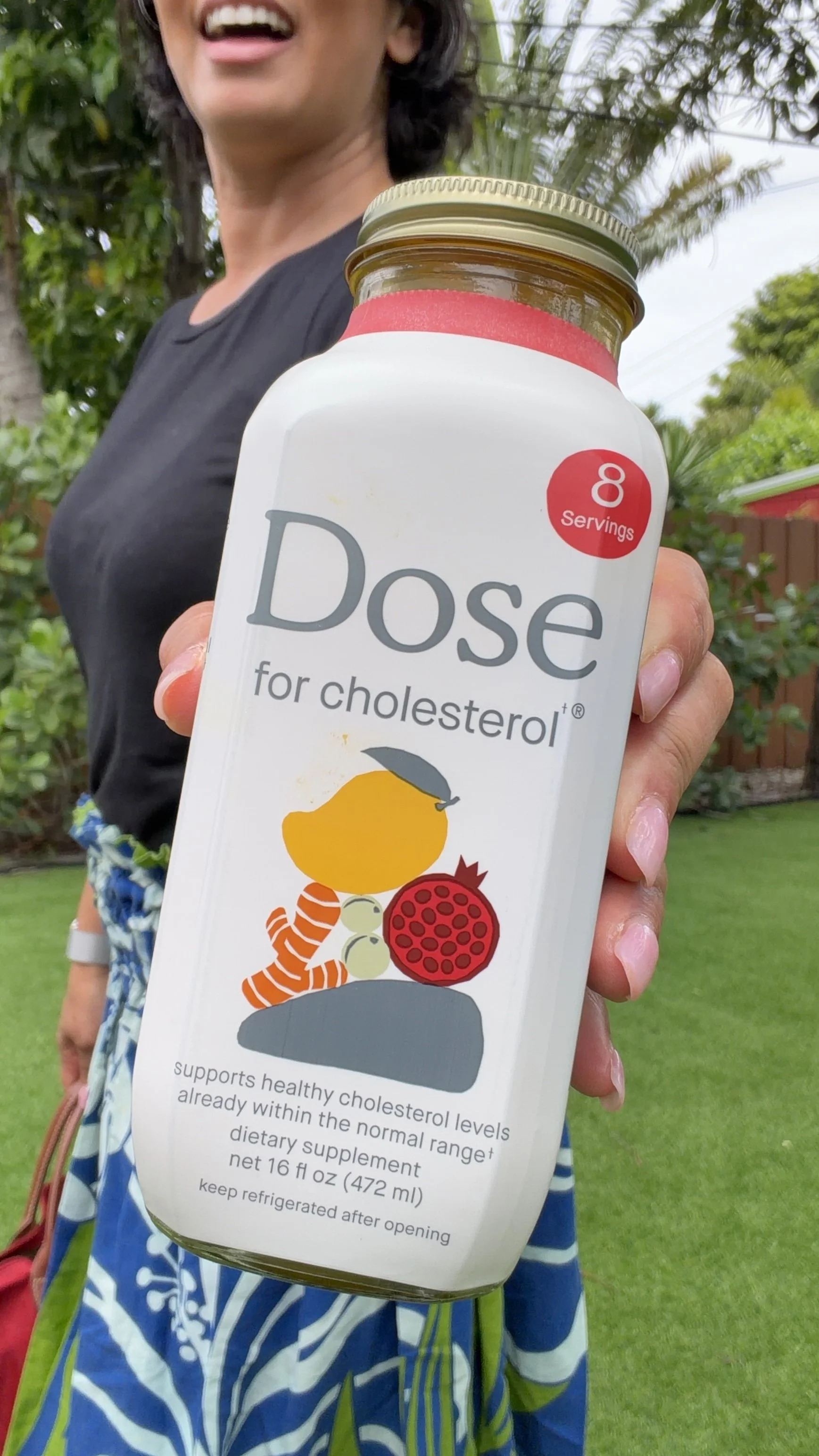
Western medicine has gotten more nuanced here — early research suggests it's not just "high LDL bad, high HDL good" anymore. It's about particle size, oxidation, and inflammation. Small, dense LDL particles that get oxidized are the ones associated with arterial plaque buildup — not cholesterol in general. Many practitioners now look at markers like ApoB, triglyceride-to-HDL ratio, and inflammatory markers like hs-CRP alongside a standard lipid panel, because the full inflammatory picture tells you more than one number ever could.
And the subtle signs? They're easy to miss because they don't scream at you. Fatigue that doesn't make sense. Tightness in the chest with exertion. Small yellowish deposits near the eyes. A family history you've been quietly ignoring. As one integrative medicine practitioner put it —
"The body whispers before it screams…and cholesterol is one of the easiest signals to miss. Between stress, travel, processed foods, and inconsistent movement, many people feel 'fine' while their cholesterol is quietly impacted over time." — mysubscriptionaddiction.com
— and that's the thing. The conventional approach often narrows in on a single number instead of supporting the body as a whole — balance across LDL, HDL, triglycerides, and total cholesterol together, not one marker in isolation. This isn't medical advice — if you have concerns about your cholesterol or cardiovascular risk, that's a conversation for your doctor, not your Instagram feed.
The Eastern Point of View: Cholesterol as "Dampness" and "Phlegm"
Now here's where it gets interesting — because TCM was talking about this pattern thousands of years before we had a lipid panel to prove it.
In Chinese medicine, we don't have a direct one-to-one term for "cholesterol." But the pattern it creates — sluggish circulation, buildup, stagnation — maps almost perfectly onto what we call Phlegm-Dampness (痰湿). Think of Dampness as your body's tendency to accumulate what it can't transform or move. And who's responsible for transformation? The Spleen. Who's responsible for smooth flow? The Liver.
When the Spleen is weak — often from poor diet, overthinking, or chronic stress — it fails to transform fluids and fats properly, and Dampness accumulates. Over time, Dampness thickens into Phlegm, which in TCM theory can lodge in the vessels, the arteries, even the mind (this is part of why Phlegm patterns are also linked to brain fog and heaviness). Sound familiar? That's the energetic ancestor of what we now measure as elevated LDL and arterial plaque.
Then there's the Liver's role. The Liver governs the smooth flow of Qi — and emotionally, it houses frustration, resentment, and suppressed anger. When Liver Qi stagnates — when we're not processing our emotions, when we're clenching instead of releasing — that stagnation doesn't stay emotional. It becomes physical. Liver Qi Stagnation is classically associated with poor fat metabolism, because the Liver is also the organ tasked with regulating lipids and bile flow. This is TCM as an interpretive lens, not a diagnostic replacement — but it's a strikingly aligned one.
So in TCM terms, elevated cholesterol often isn't "bad luck" or "bad genes" — it's a downstream signal of Spleen Qi deficiency (poor transformation) tangled up with Liver Qi stagnation (poor flow). Two systems, one traffic jam.
Where East and West Actually Agree
This is my favorite part — because when you strip away the language differences, both systems are describing the same root issue: things aren't moving the way they should, and something is accumulating instead of being processed.
Western medicine says: inflammation + oxidized particles + poor lipid clearance.
TCM says: Dampness accumulation + Liver Qi stagnation + Spleen deficiency.
Different vocabulary. Same underlying story — stuff getting stuck instead of flowing.
What I Suggest (Gently, Not Prescriptively)
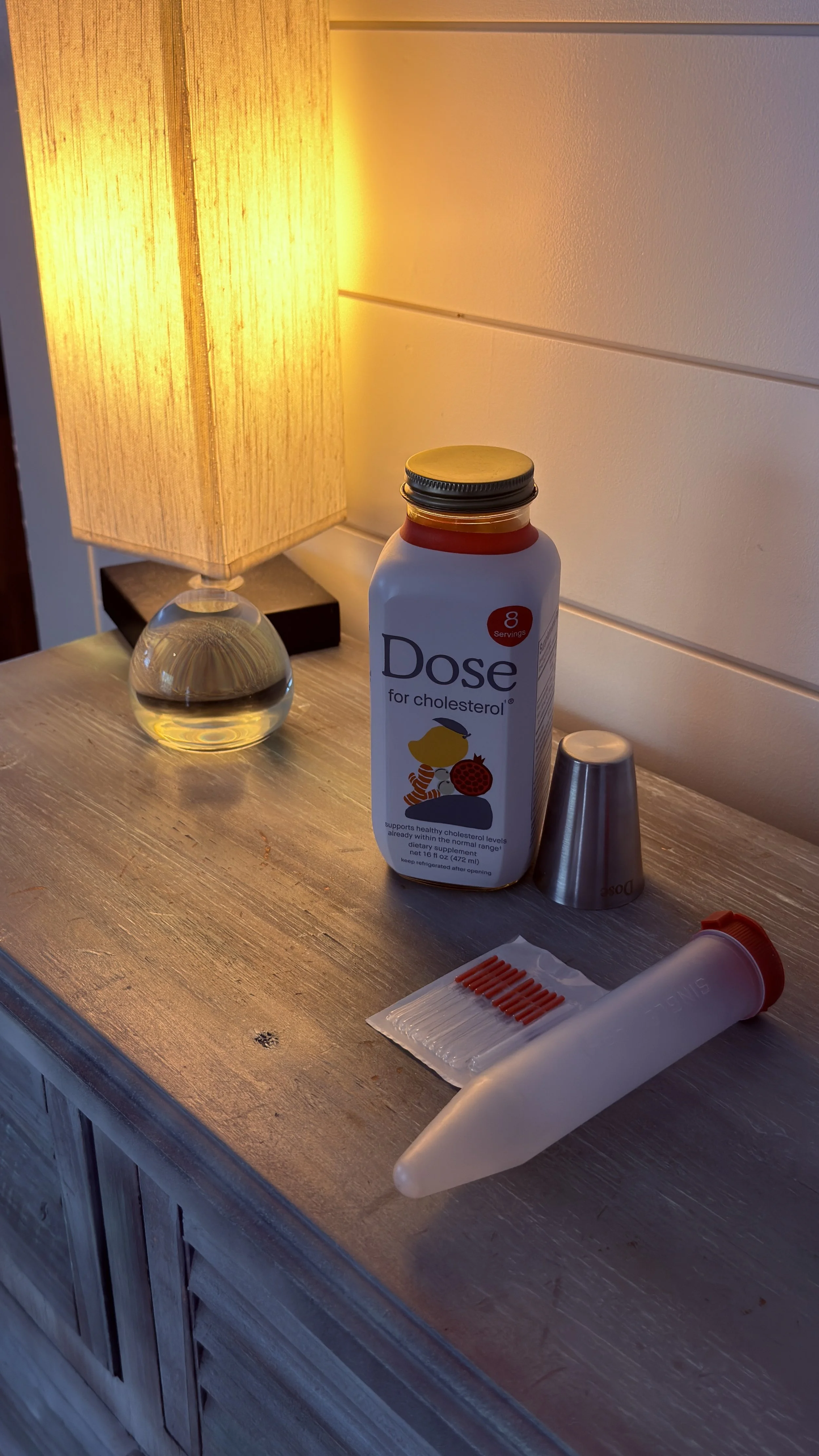
I'm not a cardiologist, and I'm not here to tell you to stop your statin or start one. What I am here to say is this — many people report feeling supported by addressing both sides of this equation simultaneously:
Support Spleen function with warm, cooked foods rather than a diet of cold, raw, or ultra-processed meals that tax digestion
Move Liver Qi through actual movement — walking, stretching, breathwork — and through emotional processing, not just supplements (this is where NET work comes in for a lot of my clients)
Get the full Western picture — don't just look at total cholesterol, ask your provider about particle size and inflammatory markers
Consider format, not just ingredients — some people find liquid botanical formulations easier to stick with consistently than a pill regimen; consistency tends to matter more than any single ingredient
Watch the whispers, not just the shouts — fatigue, chest tightness, brain fog are data, not inconvenience
Cholesterol was never meant to be the enemy. It's a messenger. The question isn't "how do I lower this number" — it's "what is my body trying to tell me about flow, transformation, and what I haven't processed yet."
That's the real medicine. East, West, or otherwise.
This article is for educational purposes and reflects a TCM interpretive framework alongside established Western physiology. It is not a substitute for individualized medical advice — please consult a qualified healthcare provider regarding your cholesterol and cardiovascular health.
